Ella’s depressive and suicidal crisis
Cinder & EllaElla’s depressive and suicidal crisis is not a single episode but a recurring struggle shaped by bereavement, bullying, disability, and the threat of losing control over her own decisions. Its course turns on a difficult distinction: Ella denies that she is currently at risk of suicide, yet her depression is worsening, and the adults around her must decide how to protect her without making care feel like punishment or confinement.
Background and Isolation
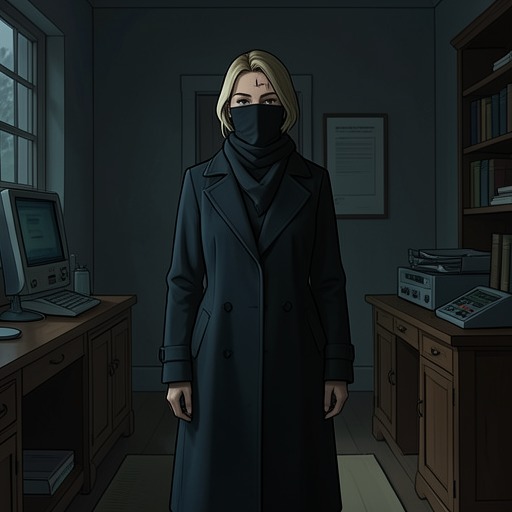
After the accident and her mother’s death, Ella tries to keep the worst of her distress private. At school, classmates taunt her from a distance rather than confronting her directly. She lowers her head, completes her assignments, and holds back her tears until she can lock herself in her room. There, she cries and then writes to Cinder, whose silly stories and irreverent comments about books and films give her something to answer back to and, for a while, help make things feel manageable.
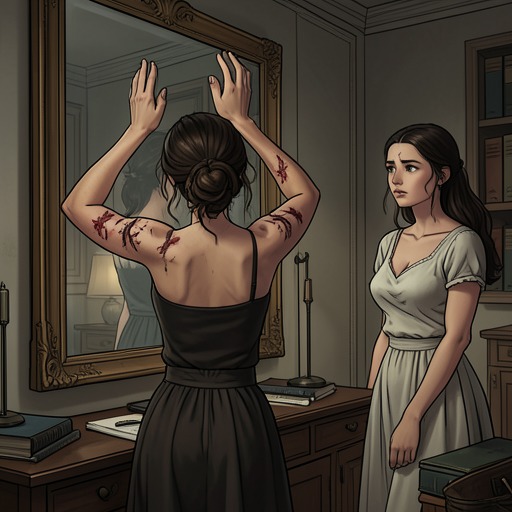
Cinder asks about the accident, her mother, and life with her new family, but Ella cannot bring herself to tell him much. She says she is fine and redirects the conversation whenever it approaches subjects she cannot bear to discuss. The friendship matters precisely because she experiences it as a refuge: she calls him her sunshine and fears that honesty could cost her the one relationship she can rely on. That fear also shapes what she withholds about her body and her mental health. She imagines that, once Cinder sees her scars, he might remain her friend but become ashamed of her, like the people in her family whom she believes cannot look at her without discomfort.
The same protective silence follows Ella into her dealings with the adults who are concerned for her. When her father and school authorities discover that she is being bullied, they contact Dr. Parish. Ella explains that the suicidal thoughts and struggles have been with her since the school year began; what has changed is that the adults now know. After disclosing this, she tries to undo the admission by insisting that the period after the accident is over and that she is better. Her fear is less that people will misunderstand a finished crisis than that they will see her as permanently defined by it.
Depression, Assessment, and the Hospital Question
Dr. Parish tells Ella that her depression has grown worse, something Ella has reported in their sessions. During a meeting with her father and other adults, Ella bursts out that even getting out of bed is difficult. The response is immediate: her father tells her she is ill and needs help before she harms herself again. Ella rejects the prospect of a clinic, insisting that she is not suicidal and will not go. She fears both forced confinement and the stigma that, in her view, would give her classmates another reason to mock her.
Dr. Parish distinguishes between present danger and the possible value of treatment in a supervised setting. She tells Ella’s father that she does not believe Ella is at risk of harming herself, but still thinks a temporary hospital stay could help. That distinction does not ease Ella’s fear. She cries as she explains that she does not want to be cut off from the world again or fall further behind at school. Her father, who had said he could compel her to go if it were best, changes course: he agrees to trust her judgment and asks what can be done to let her continue school without hospitalization.
The alternative is an intensive set of safeguards rather than a return to ordinary life. Dr. Parish asks to see Ella every other day instead of weekly, tells the family that Ella should not be alone for the time being, and bars her from using her bedroom except for sleep; even then, the door must remain open. She must also try to connect with her stepfamily and classmates, including finding someone to eat lunch with. Principal Johnson suggests joining a school activity and making the effort to approach other students. The plan treats social contact as part of Ella’s safety, though it also imposes close supervision at a moment when she is already frightened of being controlled.
Cinder as Refuge and Witness
The treatment plan pushes Ella to confront how little support she believes she has. Dr. Parish says that independent living can be considered if Ella can show she will not be entirely alone: she needs friends, dependable backing, or a support group, and might try reconnecting with old friends in Boston. If she can build a genuine safety net, Dr. Parish promises to accompany her while she looks for an apartment. Ella carries that promise with her, but at first sees only one possible starting point.
In messages to Cinder, Ella eventually confesses that she may be sent to a psychiatric hospital if she cannot get along with her father’s family and make friends at school. When she explains that bullying has come to the adults’ attention, he reacts with anger on her behalf; then he asks what she means when she says she might try to kill herself again. Ella regrets having told him and tries to reassure him that she has learned from the period after the accident and is now all right. The exchange exposes the gap between her declaration that she is fine and the seriousness of what she has just disclosed.
Later, when Ella cries during a conversation, she tells Cinder that it feels good to have someone care about her and calls him her best friend. He answers with a personal disclosure: a friend of his died by suicide, and he cannot bear the thought of losing Ella in the same way. He gives her his phone number and invites her to call at any hour. His response makes the friendship more than a private source of distraction; he becomes a witness to the risk Ella has tried to minimize and an available source of direct support.
Yet the bond does not immediately remove her fear of intimacy. Ella has already fallen in love with Cinder but believes that meeting him would make her want more than he could offer. She fears he would not want her after seeing her scars, even if he continued to care for her as a friend. She therefore keeps silent about living in Los Angeles and does not suggest meeting. The same expectation of rejection later informs her decision to refuse a relationship with Brian: public attention, she believes, would expose her injuries and history to people who would judge her.
Public Exposure and the Return of the Crisis
At FantasyCon, Brian is drawn to Ella in her elaborate costume and describes her as witty, spirited, and striking. That scene offers an important contrast with the image Ella carries of herself: someone whose scars make her difficult to look at and whose disability and past will place a burden on anyone who comes close. But a connection with a famous person also threatens to make private suffering public. When Ella and Brian’s relationship becomes entangled with media attention, she fears that photographs of her scars and details of the accident, her mother’s death, and her past suicide attempt will become entertainment for strangers.
Ella tells Brian that she is no longer suicidal, while acknowledging that not being at risk does not mean she is always well. When he comforts her and touches her scars, she withdraws. In that moment, she fears that his knowledge has changed the way he sees her—that he now expects her to break down and regards her as damaged and fragile. The scene echoes her earlier fear about Cinder: being known more fully may bring care, but it may also make her feel newly watched and defined by injury.
When she ends things with Brian, her reasoning returns to the crisis’s central pressures. She cannot endure the prospect of the world consuming her pain, her mother’s death, her accident, and her suicide attempt as public spectacle. Later, she explains to Dr. Parish that a brief period with Brian was followed by national ridicule and a false account that he had to use to protect his career. She fears renewed humiliation and does not want to damage his future. Dr. Parish acknowledges that such a situation would be unhealthy and stressful, while asking whether Ella would reconsider if the public response were different. Ella admits that acceptance would change her answer, revealing how much her withdrawal depends not simply on lack of feeling but on the expectation that exposure will bring harm.
That expectation is reinforced by renewed bullying at school. After students take and play with Ella’s cane, she is injured and cannot put weight on her leg. Several students are suspended, and Rob also receives a suspension for fighting back; the school considers expelling the student who deliberately caused her injury. Ella’s father arrives with Jennifer, other family members, and Dr. Parish. In tears, Ella asks to leave the school, saying she does not care if she fails to graduate. Her father agrees to find another way for her to finish and demands the return of her tuition. The scene makes clear that her crisis is not only an internal condition: hostility and barriers in her environment repeatedly intensify it.
Safety, Support, and the Meaning of Recovery
The story does not equate recovery with a simple declaration that Ella is fine. She can insist, truthfully, that she is no longer suicidal while still experiencing depression, fear, grief, and the effects of public cruelty. Her refusals—to enter a hospital, meet Cinder, or pursue Brian—are bound up with self-protection, but they also leave her isolated. The narrative keeps both sides visible: the danger of being left without support and the danger Ella feels in letting other people decide what safety should mean.
The idea of a safety net develops from Dr. Parish’s condition for independent living into a visible circle of people. During a later transition in Ella’s care, Dr. Parish gathers her father, Jennifer, Juliette, Rob, Vivian and Vivian’s fathers, and members of Ella’s rehabilitation team. She tells Ella that they are there to support her through the next step. Their presence contrasts with the room where Ella once feared that the adults had already decided to hospitalize her: support now includes people she has chosen or come to trust, not only professionals assessing her risk.
The crisis therefore changes through acts of connection rather than a single cure. Dr. Parish offers care with conditions; Ella’s father moves from invoking his authority to listening when she refuses hospitalization, and later supports her decision to leave a school that has become intolerable. Cinder offers an intimate channel for honesty, while Vivian, Rob, Juliette, and the wider care team help make support tangible. At the same time, Ella’s continuing fear of exposure shows that connection does not erase the forces that made secrecy feel necessary. Her recovery is presented as the hard work of building enough dependable relationships to protect her autonomy without requiring her to pretend that she is never in pain.